
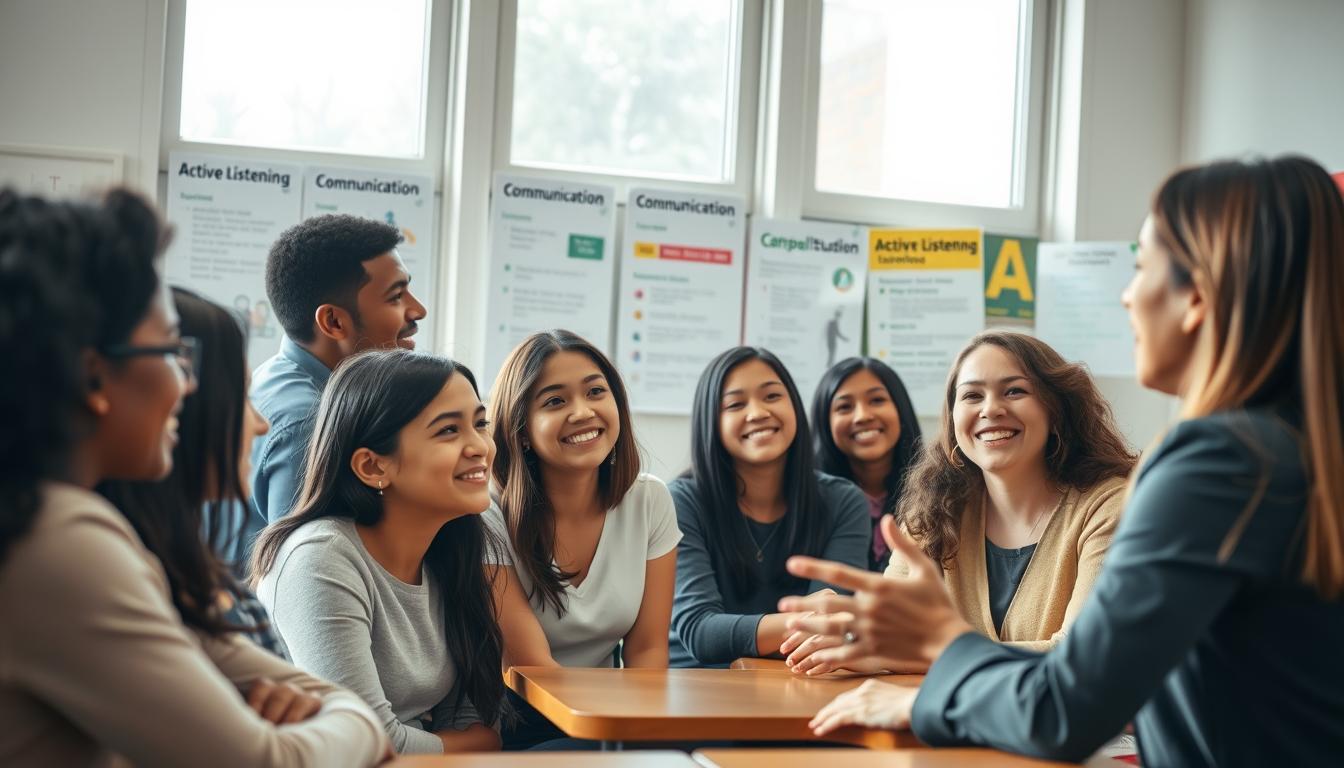
Can a simple conversation transform the classroom experience? Effective communication is the backbone of a productive learning environment. When educators foster a positive and inclusive atmosphere, students are more likely to engage and succeed.
Developing strong communication strategies is crucial for educators. By understanding the significance of their interactions with students, educators can create a supportive classroom setting that promotes academic success and strengthens relationships.
Key Takeaways
Table of Contents
- Effective communication is key to a productive learning environment.
- Educators can foster a positive classroom atmosphere through strong interactions.
- Improving teacher-student interactions leads to better academic outcomes.
- Strategies for effective communication can be learned and implemented.
- A supportive classroom setting promotes student engagement and success.
The Foundation of Educational Success
Enhancing classroom communication is essential for creating an environment where students can thrive academically and personally. When educators prioritize effective communication, they lay the groundwork for a positive and productive learning experience.
Why Communication Matters in Education
Effective communication is the backbone of education, enabling teachers to convey complex ideas, clarify expectations, and provide timely feedback. By doing so, educators can develop positive teacher-student relationships that encourage student participation and engagement. Some key benefits of effective communication in education include:
- Increased student confidence
- Better understanding of course material
- Improved academic performance
The Impact of Effective Communication on Learning Outcomes
The impact of effective communication on learning outcomes cannot be overstated. When educators employ communication techniques for educators that cater to the diverse needs of their students, they can significantly enhance the learning experience. This, in turn, leads to improved academic outcomes and a more supportive classroom environment.
By understanding the importance of effective communication and its impact on learning outcomes, educators can refine their strategies to better support their students. This involves being mindful of the various communication techniques that can be employed to enhance the educational experience.
Mastering Teacher-Student Communication Skills
Teacher-student communication plays a pivotal role in shaping the learning environment. It is the foundation upon which effective learning is built, influencing both academic performance and student-teacher relationships.
Core Components of Effective Communication
Effective communication in the classroom involves several key components, including clarity, active listening, and empathy. Active listening is particularly crucial as it ensures that students feel heard and understood, fostering a more inclusive and supportive learning environment. By incorporating nonverbal communication techniques, such as maintaining eye contact and using open body language, educators can further enhance the learning experience.
Identifying and Overcoming Communication Barriers
Despite its importance, effective communication can be hindered by several barriers. Understanding these obstacles is the first step towards overcoming them.
Cultural and Language Differences
Cultural and language differences can significantly impact communication in the classroom. Teachers must be aware of these differences and adapt their communication strategies accordingly.
Technology and Generational Gaps
The integration of technology in education can also create barriers, particularly when there are generational gaps between teachers and students. Being mindful of these differences can help educators use technology more effectively.
| Communication Barrier | Impact on Learning | Strategy for Overcoming |
|---|---|---|
| Cultural Differences | Misunderstandings and misinterpretations | Cultural sensitivity training for educators |
| Language Barriers | Difficulty in understanding instructions | Use of visual aids and bilingual resources |
| Technological Gaps | Distraction and decreased engagement | Judicious use of technology, digital literacy programs |

Implementing Effective Verbal Communication Strategies
To foster a productive learning environment, educators must prioritize clear and concise verbal communication. This involves not just conveying information but ensuring that students understand and engage with the material.
Delivering Clear and Concise Instructions
Clear instructions are fundamental to student success. Teachers should avoid ambiguity by being direct and specific. For instance, instead of saying “do the exercises,” say “complete exercises 1 through 5 on page 32.”
- Use simple language
- Break down complex tasks
- Provide examples
Formulating Questions That Stimulate Thinking
Questions should encourage critical thinking and curiosity. Open-ended questions that prompt discussion are particularly effective. For example, “How do you think the author’s perspective influenced the narrative?”
| Question Type | Purpose | Example |
|---|---|---|
| Open-ended | Encourage discussion | “What are the implications of…?” |
| Probing | Deepen understanding | “Can you explain further…?” |
Providing Constructive Feedback That Motivates
Feedback is crucial for student growth. It should be specific, timely, and actionable. Instead of saying “good job,” say “your analysis of the theme was insightful; consider exploring it further in your next assignment.”
By implementing these strategies, educators can significantly enhance student engagement and understanding, creating a more effective and supportive learning environment.
Enhancing Classroom Dynamics Through Nonverbal Communication
Teachers can significantly impact their students’ learning experiences through mindful nonverbal communication. Nonverbal cues, such as body language and facial expressions, play a crucial role in shaping classroom dynamics and influencing student engagement.
Leveraging Body Language and Facial Expressions
Body language and facial expressions are powerful tools that can either reinforce or contradict verbal messages. Teachers can use positive body language, such as maintaining eye contact and using open postures, to create a welcoming environment. Smiling and nodding can encourage students to participate more actively, while a gentle touch on the shoulder can offer reassurance.

Optimizing Classroom Arrangement for Better Interaction
The physical arrangement of the classroom can significantly impact nonverbal communication. Arranging desks to facilitate group work can encourage collaboration and interaction among students. Teachers should also consider the visibility of instructional materials and the teacher’s ability to move around the room to engage with students.
Incorporating Visual Elements to Support Learning
Visual elements, such as diagrams, charts, and videos, can support learning by making complex concepts more accessible. Incorporating multimedia resources can cater to different learning styles, enhancing the overall learning experience. Teachers should ensure that visual aids are clear, relevant, and used judiciously to avoid distractions.
By being mindful of nonverbal communication strategies, educators can enhance classroom dynamics, foster a positive learning environment, and develop more effective teacher-student relationships.
Developing Positive Relationships Through Active Communication
By adopting active communication techniques, educators can significantly enhance their relationships with students. This involves being fully present and engaged in interactions, understanding student needs, and responding in a supportive manner.
Practicing Active Listening Techniques
Active listening is a critical component of effective communication in the classroom. It involves maintaining eye contact, nodding to show understanding, and asking clarifying questions to ensure comprehension. By doing so, educators demonstrate their commitment to student success and foster a sense of trust and respect.
Cultivating Empathy and Emotional Intelligence
Cultivating empathy and emotional intelligence is essential for creating a supportive learning environment. Educators who can understand and manage their own emotions, as well as empathize with their students, can better navigate classroom dynamics and promote a positive atmosphere.
Creating Inclusive Spaces for Student Expression
Creating an inclusive space where students feel comfortable expressing themselves is vital. This involves encouraging participation from diverse learners and navigating difficult conversations respectfully.
Encouraging Participation from Diverse Learners
To encourage participation, educators can use various strategies such as personalized learning plans, culturally responsive teaching practices, and inclusive classroom activities. This helps ensure that all students have a voice and feel valued.
Navigating Difficult Conversations Respectfully
Navigating difficult conversations requires empathy, patience, and a calm demeanor. Educators should approach these conversations with an open mind, listening actively to students’ concerns and responding thoughtfully.
Effective Teacher-Student Communication: The Key to Educational Success
Developing strong teacher-student communication skills is crucial for a productive learning environment. By implementing effective communication strategies, educators can improve academic outcomes and foster positive relationships with their students.
Enhancing classroom communication involves more than just conveying information; it’s about creating an inclusive space where students feel valued and supported. Teachers can achieve this by practicing active listening, cultivating empathy, and using nonverbal cues to encourage student expression.
Improving teacher-student interactions requires a combination of verbal and nonverbal communication techniques. By leveraging these strategies, educators can better meet the diverse needs of their students, leading to a more productive and engaging learning experience.